Dialogue for Understanding
Training to Engage More Effectively Across Disagreement
Project Details
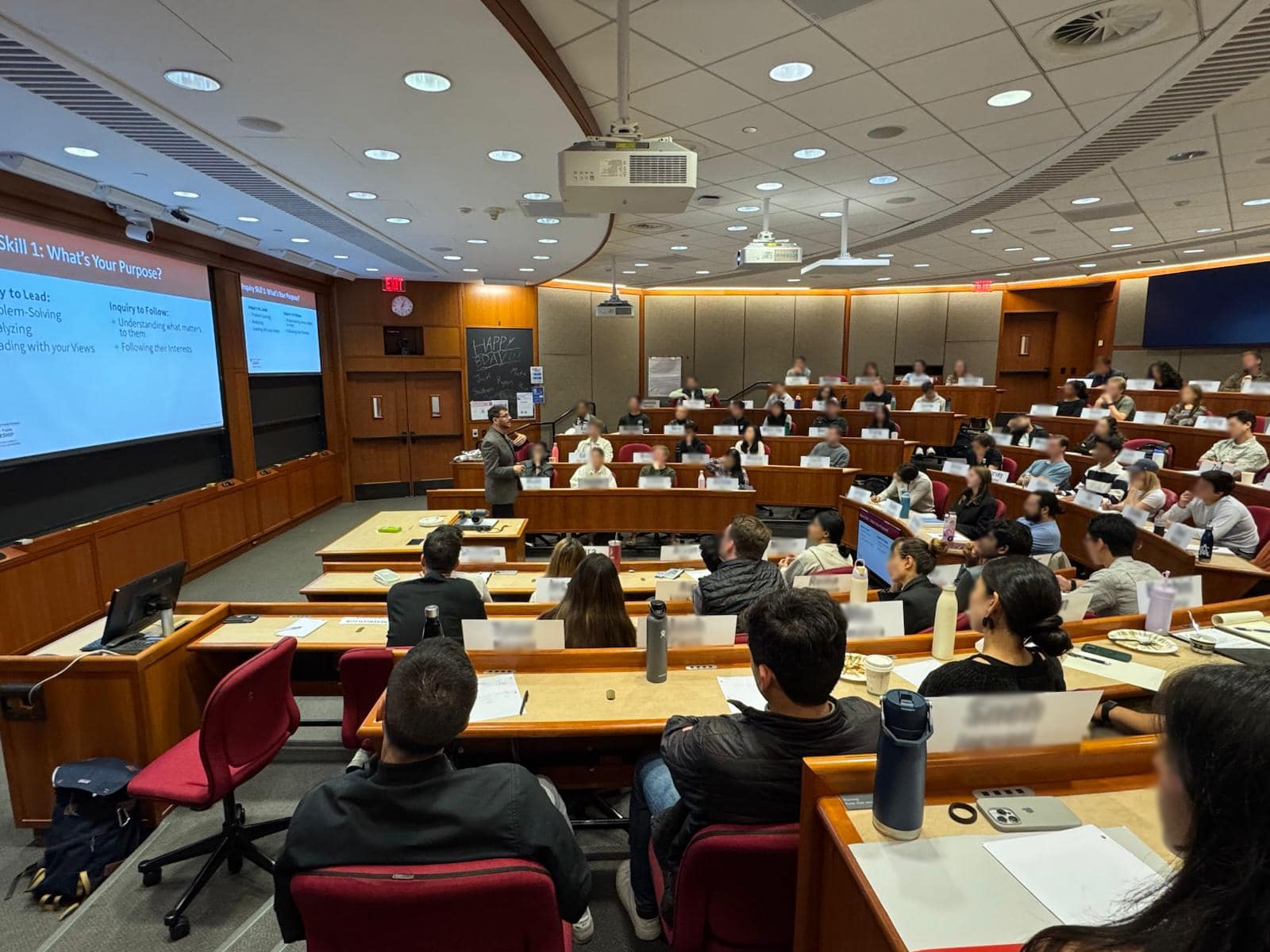
Dialogue for Understanding is a training program designed and delivered by the Negotiation and Conflict Resolution Collaboratory (NCRC) at Harvard Kennedy School that equips participants with practical skills for navigating difficult, divisive conversations — not by avoiding discomfort, but by learning to engage with it more skillfully. What began as a program for incoming students at Harvard Business School has grown into a broader offering, now delivered in a variety of formats at Harvard Kennedy School and to external organizations and groups.
How It Began
The October 7 attacks on Israel by Hamas and subsequent war in Gaza became one of the most polarizing and painful topics on university campuses across the country — and our own community was no exception. At Harvard Business School, a group of students noticed something troubling: their peers were shying away from conversations that might become contentious, and many felt they simply didn’t have the skills or tools to engage across deep disagreement without doing more harm than good.
So they asked for help.
What began as a small number of workshops in response to that request grew, over two years, into a full program and a required part of the co-curricular experience for every incoming HBS student, reaching up to 1,000 students each year. Dialogue for Understanding was built on the belief that the ability to engage across difference is not a personality trait. It is a learnable skill. And it is one that future leaders cannot afford not to have.
Beyond HBS
The demand for these skills extends well beyond any single institution. NCRC now delivers Dialogue for Understanding in a variety of formats — to students and fellows at Harvard Kennedy School, and to external organizations seeking to build the capacity for more constructive dialogue within their teams, communities, or sectors. Whether delivered as a single intensive session or a multi-part program, the core framework remains the same: grounded in behavioral science, built around practice, and designed to produce real and lasting habit change.
If your organization is interested in bringing Dialogue for Understanding to your community, we’d love to hear from you.
What the Program Does
Dialogue for Understanding is built around a simple but demanding premise: that engaging well across deep disagreement requires more than good intentions. It requires skills — and those skills can be taught.
The program draws on best-in-class dialogue frameworks and behavioral science to help students understand what gets in the way of genuine exchange, and what it takes to move through it.Over the past three years, we have built the capacities of more than 500 negotiators from 126 countries through training, coaching, and on-the-ground support.
Participants work with four interconnected areas of learning:
Managing Cognitive Biases
Students explore naive realism — the tendency to assume that our own perceptions are accurate while others’ are biased — and confirmation bias, which leads us to seek out information that confirms what we already believe. They also examine the role of the amygdala in triggering emotional responses that can hijack our capacity for productive dialogue before we even realize it’s happening.
Building Inquiry Skills
Students learn to identify the signposts in a conversation that reveal what matters most to the other person — and to follow meaning rather than redirect it. This means learning to demonstrate genuine understanding, not just the appearance of it.
Balancing Inquiry and Advocacy
One of the core habit shifts the program teaches is knowing when to pause advocacy. Students practice using the Ladder of Inference — a framework for surfacing how quickly and unconsciously we move from raw data to sweeping conclusions — to create more space for mutual understanding without abandoning their own perspective.
Elevating Conversations to Be Generative
The goal of dialogue is not just to avoid conflict. It is to uncover the hidden layers of meaning beneath our assumptions and arrive at ideas and understanding that didn’t exist before the conversation began.
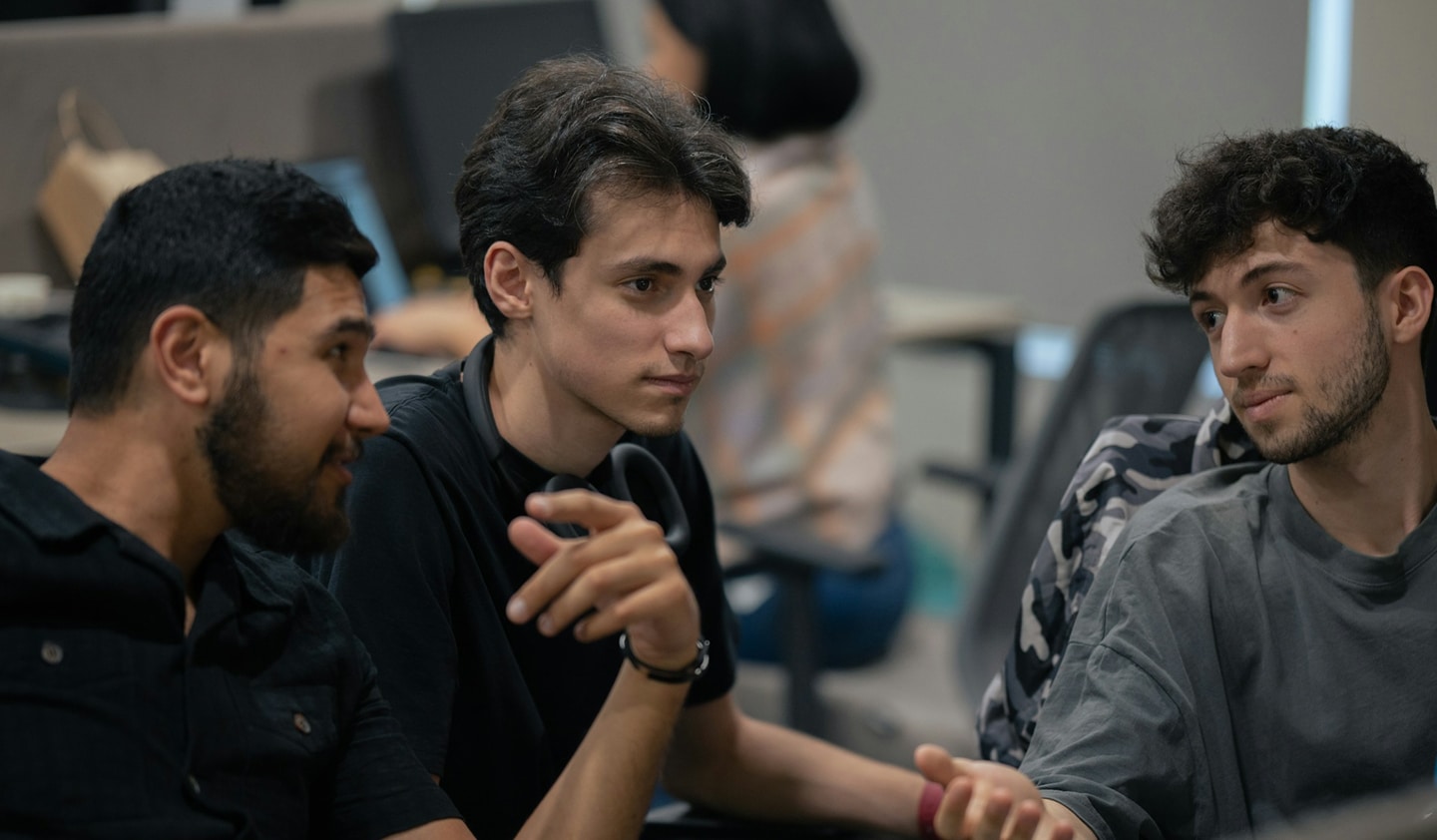
Students, and non-student participants, apply these frameworks in real time, practicing dialogue with their peers on some of today’s most contested issues — including ongoing global conflicts, issues related to wealth and inequality, and the status and future of U.S. democracy. The goal is not consensus. It is the capacity to stay in the conversation, think more clearly, and engage more honestly — even when it’s hard.

What the Data Shows
The program is evaluated rigorously, and the results are consistent. Notably, students who expressed skepticism about structured dialogue at the start of the session consistently shifted their view by the end — the format became more convincing through experience, not just instruction.
After completing the fall session, HBS students report:
87%
have greater awareness of dialogue best practices and strategies
85%
have identified concrete areas for their own growth
80%
feel more confident balancing advocacy with inquiry
73%
feel more comfortable applying the skills they learned
What Students Are Saying About These Trainings:
“Small groups made it feel safe to try.”
“Understanding how I jump to conclusions about my own opinions, and discredit others.”
“Realistic practice instead of just slides.”
“The framework of inquiry, following, understanding.”
“Facilitator feedback during the reps was incredibly valuable.”